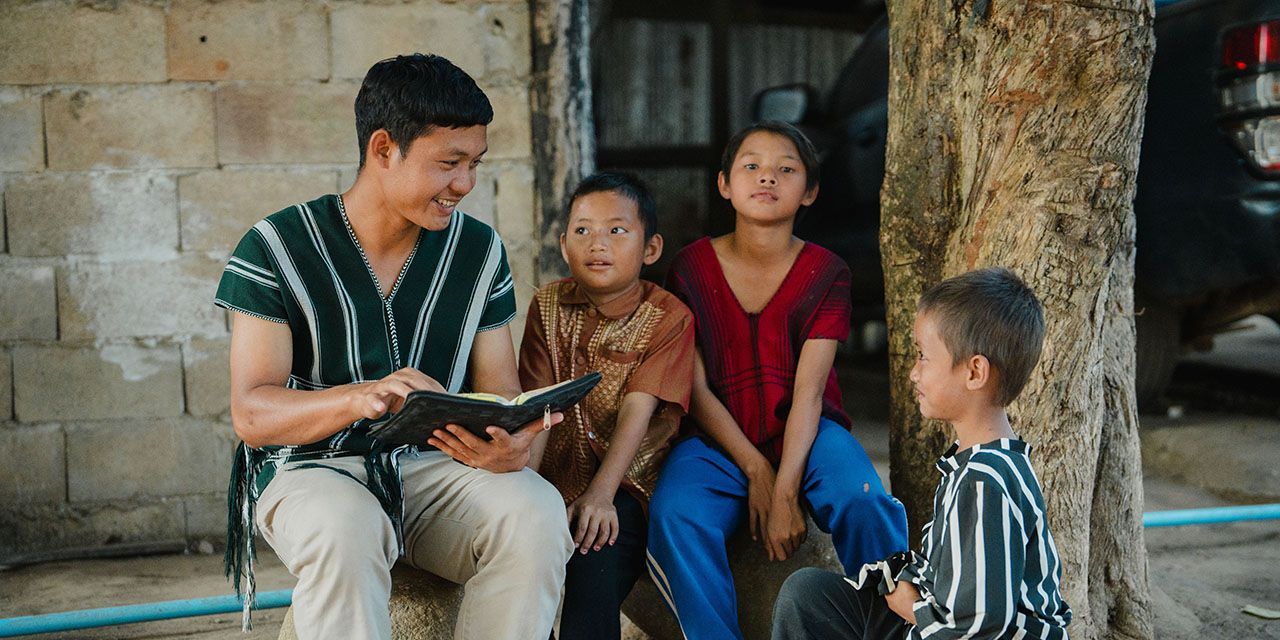
Millions still haven't heard Jesus' name.
Southeast Asia contains some of the least-reached people groups in the world. Despite centuries of Christian mission work, today millions have never had a meaningful opportunity to follow Jesus. Entire communities have no church, no pastor, and no Christian friend to tell them about His love.
Follow the Mission
Sign up to receive inspiring stories, mission updates, and opportunities to make an eternal impact among Southeast Asia's unreached people groups.
Why Southeast Asia?
Southeast Asia is one of the last frontiers to be reached with the gospel before Jesus returns. Traditional mission approaches often struggle in this region because:
- Buddhist and animist cultures have fundamentally different worldviews from Western cultures.
- Western evangelistic materials frequently fail to connect with Buddhist audiences.
- Foreign missionaries require significant time and resources to learn the language and the culture.
- Local churches often lack funding, training, and ministry resources.
- Many remote communities have never been intentionally reached.
- Poverty, limited educational opportunities, and social challenges create additional barriers to gospel growth.
175 million
Buddhists in Southeast Asia. No other region has a larger concentration.
52%
of Southeast Asia's people groups have little or no access to the gospel.
1
Seventh-day Adventist for every 2,985 people in Southeast Asia—one of the lowest ratios anywhere in the world.
Why Local Missionaries?
ASAP Ministries equips local missionaries to care for the whole person, share the gospel, and multiply disciples among the people of Southeast Asia. This method is more effective and more sustainable than many traditional mission models because local missionaries already understand the language, culture, and worldview of the communities they serve.
Every day, ASAP local missionaries:
- Plant churches
- Care for the sick
- Teach children in underserved areas
- Give Bible studies
- Meet felt needs through clean water and sanitation projects, food distribution, etc.
Each New Believer Starts a Ripple Effect
You Can Help Reach the Unreached
Your support equips local missionaries to share Christ's love, plant churches, and make disciples among people who may otherwise never hear the name of Jesus.